Pain and tenderness
Painful legs or arms, tenderness to touch or a feeling of heaviness.

Pain, swelling and changes in your body deserve attention. Understand your signs with a free questionnaire about both conditions.
Initial guidance. A diagnosis requires professional assessment.Questionnaire available in English.
Jaqueline Baiocchi
Physiotherapist · PhD in OncologyWhat you feel deserves to be heard
Changes that seem small can affect movement, clothing and how you feel.
Painful legs or arms, tenderness to touch or a feeling of heaviness.
Legs or arms that are larger than usual or disproportionate to the torso.
Bruises that appear easily, sometimes without an obvious cause.
Swelling that comes and goes or persists. Clothing, shoes or rings that feel tight.
These signs can have different causes. An assessment helps identify what is happening.

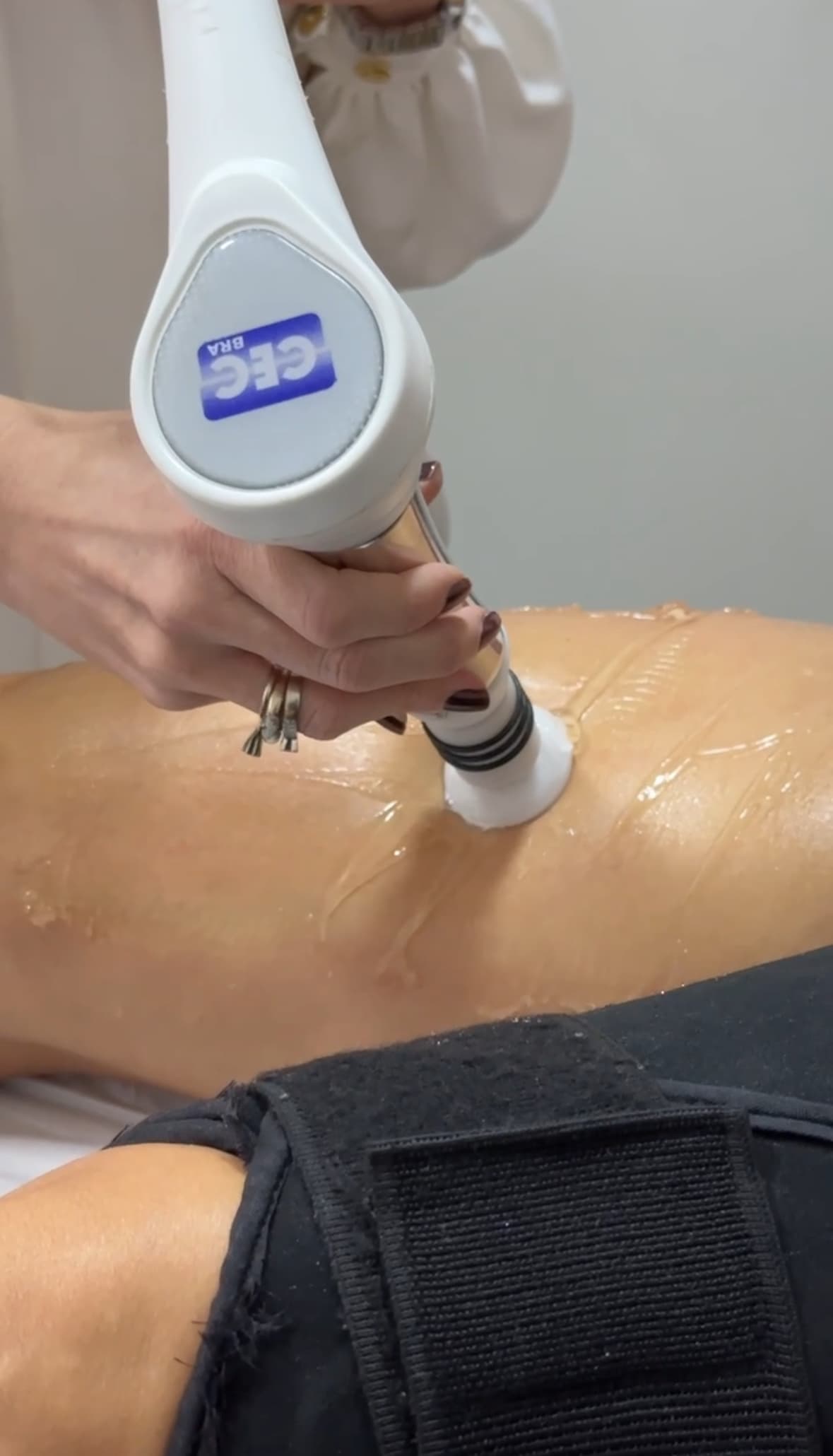 Individual attention for every body.
Understand the differences
Lymphedema is swelling caused by fluid accumulating in tissues when the lymphatic system cannot transport it adequately. It can affect the arms, legs and other areas, with a feeling of heaviness and changes in the skin.
Lipedema is a chronic condition of fatty tissue that predominantly affects women. Its distribution is usually bilateral and disproportionate to the torso, generally in the legs and, in some people, the arms. It may involve pain, tenderness and bruising.
Signs can overlap. Your history and a clinical examination help distinguish the causes and guide care.
From information to care
You don't need to know the name of the condition to start talking about what you feel.
Answer one question at a time. If you are unsure, choose one of the uncertainty options.
Finish by providing your contact details. If signs of either condition are present, the team will review your answers and send guidance.
If no pattern is identified, guidance appears at the end. Your screening is recorded in every case.
Meet the professional
A physiotherapist with a PhD in Oncology from AC Camargo Cancer Center, working in lymphedema, lipedema and oncology rehabilitation.
Her training in lymphology includes the Dr. Vodder, Leduc and Földi schools. In clinical practice, care starts with each person's history and what makes a difference in their daily life.
Explore her academic journeyTalk to the team
Before you begin
A clinical assessment is needed to determine whether you have lymphedema, lipedema or both. It considers your history, symptom onset and progression, distribution of increased size, pain, skin and mobility. Measurements and additional tests may help when indicated. Obesity, venous disease and other causes of swelling must also be considered. No single sign, photograph or questionnaire confirms a diagnosis.
Persistent or recurring swelling, a feeling of heaviness, thicker skin and clothing or accessories becoming tight may suggest lymphedema. These signs also have other causes. Assessment brings together clinical history, examination of the affected area and limb measurements; additional tests may be indicated if there is uncertainty. Observing symptoms helps describe them but does not allow you to confirm a diagnosis at home.
A similar increase in size on both sides, mainly in the legs, disproportion to the torso, tenderness and easy bruising may suggest lipedema. The feet are generally unaffected, and the arms may also show changes. This combination of signs guides investigation but does not confirm the condition. Clinical assessment helps distinguish lipedema from obesity, lymphedema and other causes.
No. It organizes your signs for initial guidance. When signs warrant investigating possible lymphedema or lipedema, the team reviews your answers and sends guidance using the contact details provided. If no pattern is identified, guidance appears at the end and your screening is recorded. A diagnosis requires professional assessment.
No. The questionnaire is public and free for people aged 18 or older. At the end, we request your name, email, WhatsApp number and authorization to record your answers and receive a response from the team.
They are different conditions and can coexist. Lymphedema affects lymph transport; lipedema involves changes in fatty tissue. Obesity and venous disease can also share signs. Appearance or a photograph alone cannot distinguish the causes.
Use the available uncertainty options. You do not need to guess. If the answers do not allow a pattern to be identified, we explain this limitation at the end. An inconclusive result does not mean there is no disease.
Primary lymphedema is related to developmental changes in the lymphatic system. Secondary lymphedema follows damage or blockage, such as surgery involving lymph nodes, radiotherapy, infections or trauma. It can appear at different times, and investigating the cause depends on clinical history.
For lymphedema, physiotherapy may include education, skin care, exercise, compression and functional follow-up. For lipedema, it can support symptom management, mobility, strength and self-care. Techniques depend on individual assessment; lymphatic drainage is not the whole treatment, and manual techniques do not eliminate lipedema fatty tissue.
No. The plan considers symptoms, function, associated conditions, tolerance and individual goals. Care aims to control symptoms, protect the skin and support mobility and quality of life. Responses vary and adjustments may be needed over time, without promising the same result for everyone.
Lymphedema and lipedema
A free questionnaire to organize what you feel
and take the first step toward an assessment.
Appointments in São Paulo, Brazil
Contact the team to learn more about care and schedule your assessment.
Talk on WhatsAppRua Alceu Wamosy, 302
Paraíso · São Paulo / SP
Postal code 04105-040